
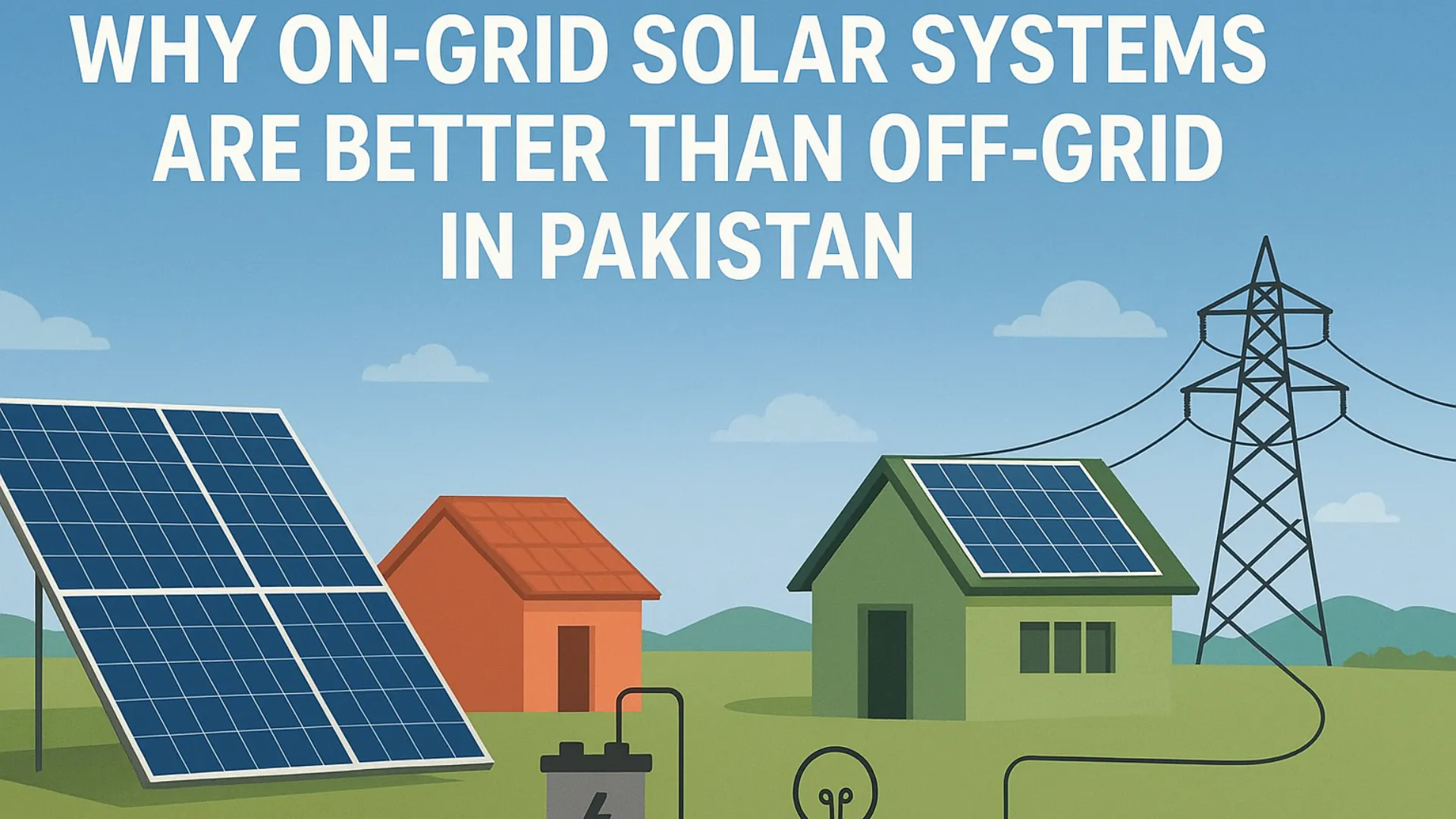
On-grid solar systems in Pakistan are becoming the preferred choice for many homeowners and businesses due to rising bills, long hours of load shedding, and a growing need for dependable power solutions. Compared to an off-grid solar system in Pakistan, an on-grid setup offers better savings, easier operation, and support through net metering — allowing users to send extra electricity back to the utility grid and reduce monthly bills. With cities facing power challenges and fuel prices climbing, more people see on-grid systems as a smart, everyday power solution.
Rising Energy Pressure in Pakistan and the Shift Toward Solar
Solar energy in Pakistan is gaining pace as electricity unit rates continue to rise and families search for ways to cut costs. While off-grid solar systems help in remote areas, most homes benefit more from on-grid solar because it reduces monthly bills and avoids expensive batteries. With fuel prices going up and frequent grid issues, solar is no longer a luxury — it’s becoming a basic need for stable energy.
High electricity bills and fuel costs are pushing homes toward solar
With electricity tariffs rising every few months and fuel prices affecting generators, many households in Pakistan are turning toward grid-tie systems provided by a trusted solar company in Pakistan to cut costs. An on-grid solar inverter works directly with the grid, making it easier to use solar energy during the day and rely on the government supply at night. This helps reduce monthly electricity units without needing big battery banks.
Key points:
- Lower monthly electricity bills
- No heavy investment in battery storage
- Smooth power during the daytime
Cost Difference Overview
| System Type | Battery Required | Monthly Bill Savings | Best For |
| On-grid solar system | No | High with net metering | Homes in cities & towns |
| Off-grid system | Yes | Full independence but costly | Remote villages, farms |
How load shedding and power cuts shape system choices
In many areas, long outages impact work, comfort, and business operations. While off-grid solar systems provide backup during grid failure, they need strong battery setups. Many urban homes instead choose on-grid with battery backup or hybrid upgrades later because it balances cost and reliability.
Benefits users notice:
- Stable power without relying fully on the grid
- Choice to upgrade to a hybrid setup later
Growing trust in solar power for long-term savings and stability
Families, schools, and offices now trust solar panels and solar companies in Pakistan because they see real savings and performance. Binfazal Solar installs systems with Tier-1 panels and reliable wiring, helping people enjoy steady power and long-term value. With proper installation and support, solar gives peace of mind for years.
Quick takeaways:
- Long-term savings
- Reliable power source
- Value grows over time
Understanding the Difference Between On-Grid and Off-Grid Systems
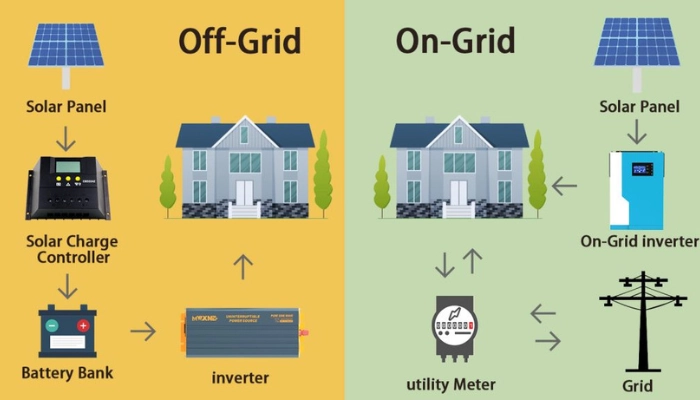
On grid solar system in Pakistan works differently from an off-grid solar system in Pakistan, and knowing the difference helps you choose the right setup for your home or business. On-grid systems focus on bill savings and net metering, while off-grid systems give full independence using batteries. Both are part of the rising solar energy in Pakistan, but they serve different needs.
Most city users choose on-grid systems because they reduce monthly bills. Off-grid setups are useful where no WAPDA supply exists, such as in rural and remote areas. Understanding how each system works makes planning easier.
How an on-grid solar system works with the WAPDA supply
An on-grid solar system connects your solar panels to the WAPDA grid. During the day, your home uses solar energy first and extra power goes to the grid. With net metering, users can earn bill credits for extra units sent back. No large batteries are required, making it more affordable.
Key points:
- Works with WAPDA and reduces unit charges
- Extra electricity earns credits under net metering
- Best for areas with a working grid
What makes an off-grid solar setup fully independent
An off-grid solar system runs without any WAPDA connection. It uses solar batteries to store energy for night and cloudy weather. This system gives full independence but costs more due to battery needs, making it ideal for remote farms, villages, and locations with zero grid access.
Main features:
- No grid connection
- Full independence
- Needs strong battery bank
On-Grid vs Off-Grid Basics
| Feature | On-Grid Solar System | Off-Grid Solar System |
| Grid Connection | Yes | No |
| Batteries | Optional | Required |
| Best For | Cities & towns | Rural, remote areas |
| Key Benefit | Lower bills with net metering | Full energy freedom |
Power flow, backup, and bill impact explained in simple words
In simple terms, on-grid solar sends power to your home first and then to WAPDA. When there’s no sun, you use grid electricity. Off-grid solar runs only on solar and battery power, so when the battery ends, power stops unless you have a generator.
Useful reminders:
- On-grid = bill savings
- Off-grid = grid-free power
- Hybrid option exists if you need both
Why On-Grid Solar Fits Most Homes and Businesses in Pakistan
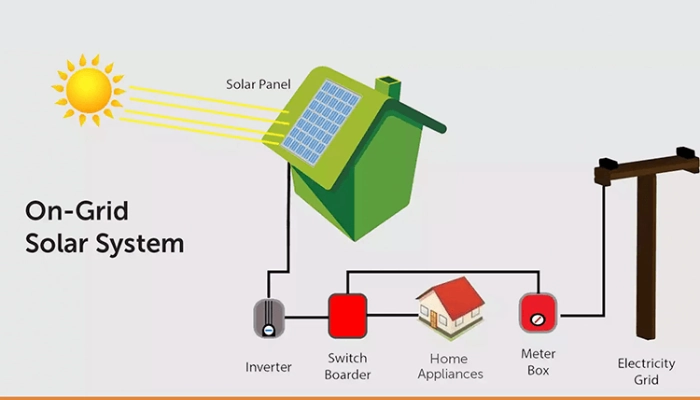
Why on-grid solar fits most homes and businesses in Pakistan has become a common question as people search for stable power and lower bills. A grid-tied solar system, linked with WAPDA or the main electricity grid, gives a steady supply without needing heavy batteries. For many families, commercial units, and offices, it brings a smooth way to cut monthly costs while enjoying a stable current during the day.
Direct bill reduction and earnings through net-metering
A net metering system in Pakistan lets you send extra units to the grid and adjust those units in your bill. With on-grid solar, daytime electricity runs directly on solar panels. Extra units add credit, bringing the bill down — some users even get a negative electricity bill.
This model supports homes, schools, factories, banks, and small businesses. Grid support means the lights stay on without running expensive generators.
- Cuts monthly bills
- Extra units go to the grid
- Benefit from NEPRA’s net metering policy
- Good for daytime usage and commercial setups
On-Grid Saving Example
| Monthly Units | Solar Units Produced | Bill Status |
| 800 | 750 | Very low bill |
| 1200 | 1300 | Bill zero / credit |
No dependency on costly batteries for daily use
Unlike off-grid solar systems, on-grid setups work without big solar battery banks, making the system cheaper. Since batteries need maintenance and replacement after a few years, avoiding them lowers long-term cost. You use the grid when the sun is down and rely on solar during the day.
This makes on-grid solar systems in Pakistan a good match for homes where night power need is high but backup is already present through UPS, inverters, or generator support.
- No large battery expense
- Lower maintenance
- Grid works as a backup system
- Easy installation and use
Higher efficiency in cities and semi-urban areas
On-grid systems work best in areas with reliable lines like Lahore, Karachi, Islamabad, Rawalpindi, Multan, Faisalabad, and semi-urban zones. Good sunshine, stable grid, and active net metering support make them useful for houses, shops, and industrial units.
- Best for urban and semi-urban regions
- Good solar performance and export units
- Works with 5kW, 10kW, 15kW and 3-phase meter setups
- Fits residential, commercial, and industrial needs
Best Use Scenarios
| Location Type | System Type |
| Cities | On-grid solar system |
| Villages / No grid | Off-grid solar |
When Off-Grid Solar Becomes the Right Option
Whether off-grid solar becomes the right option usually depends on location, electricity access, and daily power needs. In many parts of Pakistan, an off-grid solar system is useful where there is no WAPDA connection or frequent long outages. It gives full independence from the grid and runs appliances through solar batteries instead of electricity units from the government supply. While it offers freedom, users should also consider battery cost, maintenance, and space for installation.
Remote rural areas with no access to grid power
In remote villages, farms, mountain regions, and areas where WAPDA supply is not available, off-grid solar systems in Pakistan provide a complete power source. A solar battery bank stores excess energy for night use, helping run lights, fans, water motors, and communication devices.
- Best for off-grid villages and farms
- Works without WAPDA
- Helps run essential home and agriculture loads
- Good fit for campsites, rest houses, and remote business units
Ideal Locations for Off-Grid Solar
| Location Type | Reason |
| Villages with no grid | Full independence |
| Agriculture land | Tube wells, lights |
| Mountains/desert areas | No grid connection |
Places where backup is more important than bill reduction
Some users prefer off-grid solar not for saving on bills but for backup power during long load shedding. This is common in locations where outages are unpredictable and continuous power is needed for essentials like medical devices, security systems, or business tools.
- Focus on backup energy, not bill savings
- Solar keeps essential equipment running
- Avoids reliance on generators and fuel
- Suitable for shops, clinics, and cabins
Usage Priority
| Priority | Best Solution |
| Bill savings | On-grid system |
| Backup / power security | Off-grid solar |
Cost challenges and battery maintenance reality
While off-grid gives freedom, it brings costs. Lithium and lead-acid solar batteries need replacement after a few years. Systems require a proper inverter, solar charge controller, and care for batteries to avoid damage. For small homes, this can become costly over time.
- Higher cost than on-grid solar
- Batteries need space and ventilation
- Replacement cycle every 3–6 years
- Regular maintenance required
| Component | Cost Factor |
| Panels | One-time major cost |
| Batteries | Replacement cost |
| Inverter | Must match battery bank |
Side-by-Side Comparison: On-Grid vs Off-Grid Solar in Pakistan
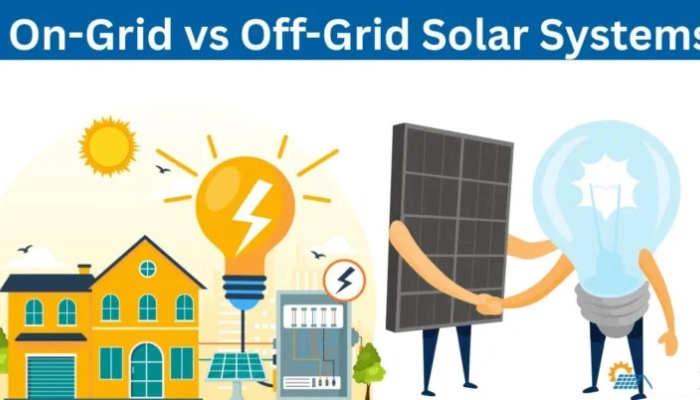
Side-by-side comparison: on-grid solar system in Pakistan vs off-grid solar system in Pakistan helps homeowners and businesses choose the right setup. Both systems use solar panels, inverters, and mounting structures, but their working, backup ability, and long-term savings differ. In cities and towns, many people prefer net-metering system setups because they cut electricity bills and connect with WAPDA. Off-grid systems stay independent and run on solar batteries, ideal for remote areas.
Installation cost, running cost, and upkeep
The installation cost of an off-grid solar setup is usually higher because it requires battery storage, charge controllers, and a powerful inverter to support loads. On the other hand, an on-grid solar system avoids batteries, which keeps costs lower and reduces maintenance.
- On-grid = lower installation and maintenance
- Off-grid = higher upfront cost due to batteries
- Lithium and lead-acid batteries increase long-term expense
- Binfazal Solar offers reliable installation and after-service support
| Factor | On-Grid Solar | Off-Grid Solar |
| Initial Cost | Lower | Higher |
| Maintenance | Low | Medium to high |
| Battery Need | No | Yes |
| Ideal Use | Homes & businesses | Remote areas |
Energy availability during outages and sunny days
During load shedding, on-grid solar systems stop working for safety unless paired with a hybrid setup. Meanwhile, off-grid solar systems in Pakistan continue running with battery backup. However, on bright sunny days, on-grid homes generate more savings by exporting power to the grid through net-metering.
- Off-grid = continuous power during outages
- On-grid = more savings on sunny days through WAPDA export
- Hybrid systems combine benefits but cost more
| Condition | On-Grid Performance | Off-Grid Performance |
| Load Shedding | Stops | Runs |
| Sunny Hours | Best savings | Stable power storage |
| Rural Areas | Not ideal without grid | Best choice |
Long-term value, upgrades, and warranty factors
For long-term planning, on-grid solar systems usually provide a higher financial return because there are no battery replacement costs. They also support net-metering, making electricity bills drop and sometimes even go negative. Off-grid systems offer energy freedom but need battery upgrades every few years.
- On-grid = best long-term return
- Off-grid = independence, but higher recurring expense
- Modern solar inverters support future upgrades
- Warranty varies based on panels, inverters, and batteries
| Feature | On-Grid | Off-Grid |
| Payback Time | Shorter | Longer |
| Warranty Needs | Inverter + panels | Inverter + panels + batteries |
| Future Scalability | Easy | Costly |
What to Consider Before Selecting Your Solar Setup
What to consider before selecting your solar setup matters because every home and business in Pakistan has different energy needs. Whether choosing an on-grid solar system in Pakistan or an off-grid solar system in Pakistan, it is important to review power usage, budget, and long-term goals. Systems with net-metering, solar inverters, and optional batteries all work differently, so selecting wisely saves money and avoids future changes.
Assessing your power usage, load, and budget
Before installing solar, check how much power you use daily. Calculate the load of home appliances such as air conditioners, fridges, fans, lights, and motors. A proper assessment helps decide what size solar panels, inverter, and structure you need. Families with high usage benefit from on-grid and net-metering systems, while remote homes may need battery-based setups.
- Review electricity bills to estimate usage
- List appliances and peak load needs
- Higher loads favor grid-tie solar systems
- Consider cost and payback duration
| Need | Best Option |
| High consumption & city location | On-grid solar with net-metering |
| Low usage village area | Off-grid solar with batteries |
| Backup priority | Hybrid / battery solution |
Deciding between no-battery and battery-dependent systems
For most urban homes, on-grid solar without batteries gives better savings and simple maintenance. Battery systems such as off-grid solar or hybrid setups are useful where the WAPDA supply is weak. But battery care and replacement add cost, especially for lithium or lead-acid batteries.
- On-grid = no batteries, lower cost
- Off-grid = full battery support for remote areas
- Hybrid is optional for backup with savings
| System Type | Battery Needed | Best For |
| On-grid | No | Cities & towns |
| Off-grid | Yes | Remote villages |
| Hybrid | Optional | Mixed needs |
Planning future expansion or hybrid upgrade options
Your solar system should be ready for future growth. Maybe later you will add batteries, extra solar panels, or upgrade the inverter. Choosing quality equipment now saves future hassle. Many homeowners trust expert installers like Binfazal Solar for system design, upgrades, and after-service.
- Choose expandable inverters
- Plan for future battery or panel addition
- Check warranty and maintenance options
| Future Goal | Recommendation |
| Later battery upgrade | Hybrid-ready inverter |
| More solar panels | Scalable system design |
| Long-term saving focus | On-grid net-metering |
Why Professional Installation Matters
Why professional installation matters becomes clear when you look at how a correctly installed on-grid solar system in Pakistan or an off-grid solar system in Pakistan performs over time. A trusted installer ensures proper sizing, clean wiring, secure panel fitting, and verified net-metering processing. With quality solar panels, genuine inverters, and safe cabling, you get better efficiency, longer life, and fewer breakdowns. Skilled providers like Binfazal Solar help avoid faults, shocks, and energy loss while guiding on future expansion and maintenance.
Correct system sizing and safe wiring
A reliable installer studies your load requirements and roof structure before planning your system. Correct sizing means your solar inverter, panels, and structure match house’s consumption and weather conditions. Proper wiring reduces fire risks and avoids power leaks.
- Accurate load calculation and inverter selection
- Safe wiring according to standards
- Proper grounding to avoid hazards
- Secure mounting structure to handle wind
| Installation Task | Why It Matters |
| Load calculation | Enough power for appliances |
| Grounding & wiring | Safety and smooth operation |
| System design | Maximum sunshine capture |
| Roof inspection | Strong support and angle setup |
Genuine components, warranty, and net-metering support
What makes a system last long is genuine components—trusted solar panels, approved net-metering inverters, strong mounting frames, and durable breakers. Good installers guide you toward Tier-1 panels, quality cables, and warranty-backed parts. They also handle net-metering paperwork to help you earn bill credits.
- Supply of original branded parts
- Warranty registration support
- Help with NEPRA and DISCO approvals for net-metering
- Maintenance advice for long-term use
| Component | Why Genuine Matters |
| Panels | Long life & better output |
| Inverter | Grid safety & net-metering approval |
| Cables/MC4 | Fire-safe connection |
| Warranty | Peace of mind |
Why many homeowners trust Binfazal Solar for long-term service
Many households and businesses choose Binfazal Solar due to reliable installation, system monitoring, and quick support. Their team ensures correct configurations for grid-tie solar systems, hybrid upgrades, and future battery options. Customers value their transparency, after-sales service, and ability to meet WAPDA and NEPRA guidelines.
- Skilled engineers and trained technicians
- Support for maintenance and service calls
- Guidance on expansion and net-metering upgrades
| Customer Support Area | Binfazal Solar Strength |
| After-sales service | Fast response |
| System upgrades | Hybrid & panel extension |
| Approval help | Net-metering process |
| Quality check | Genuine components |
GET IN TOUCH
Get a Free Solar Consultation in Islamabad Today!
Conclusion
Choosing between an on-grid solar system in Pakistan and an off-grid solar system in Pakistan depends on your goals, but most homes and businesses benefit more from on-grid options. With net-metering, you cut bills, earn credits, and enjoy stable power without the high cost of batteries. As electricity rates rise and energy demand grows, grid-tie setups offer a budget-friendly way to build long-term solar savings while staying connected to WAPDA.
Off-grid setups still matter for rural and remote areas, but for city users, on-grid systems supported by trusted installers like Binfazal Solar bring daily value and security. With genuine equipment, proper wiring, and warranty-backed installation, solar becomes a dependable investment for Pakistan’s future energy needs.
FAQs (Frequently Asked Questions)
Which is better for homes — an on-grid solar system in Pakistan or an off-grid solar system in Pakistan?
For most homes, an on-grid solar system in Pakistan is the better choice because it reduces your bill and lets you use net-metering. Off-grid systems are useful only where there is no WAPDA supply.
Can I run my home without batteries using an on-grid system?
Yes. An on-grid solar system works without batteries. It uses solar panels and the grid. But during outages, it turns off for safety unless paired with a hybrid inverter.
When should someone choose an off-grid solar system?
Choose an off-grid solar system in Pakistan if you live in a remote area without WAPDA or face long-hour outages and need independent power with reliable solar batteries.
Does net-metering really save money?
Yes. Net-metering in Pakistan allows homeowners to send extra solar units to the grid and get bill credits. This significantly reduces electricity cost over time, especially with rising WAPDA tariffs.
Can I upgrade from on-grid to hybrid later?
Many users start with an on-grid solar system and later add batteries to convert it to a hybrid system. It is cost-effective if you plan ahead and choose a compatible solar inverter.
How much maintenance do solar systems need?
Both on-grid and off-grid systems need low maintenance — mainly cleaning solar panels and basic checks. Battery-based off-grid systems need regular battery care.
Why choose Binfazal Solar for installation?
Binfazal Solar provides genuine equipment, proper sizing, net-metering support, and long-term service — which makes them a reliable choice for solar system installation in Pakistan.


